
Welcome to the World of Bile Acids
Bile acids are a family of molecules made from cholesterol whose structures vary remarkably across vertebrates, reflecting each species’ phylogeny, diet and gut bacteria. This site brings together Lee Hagey’s lifelong research on the evolution of bile salts with mass spectrometry data from the Dorrestein Lab at UC San Diego.
Start exploring
- Explore the Book – Lee Hagey’s study of bile acid evolution, chapter by chapter
- Bile Acids by Phylogeny – which bile acids are found in each group of vertebrates
- Bile Acid by Structure – browse bile acids by their chemical structure
- Explore the Data – mass spectrometry data behind the project
- Resources – references and related tools
- Contributions & Contacts – how to contribute or get in touch
Team
Lee Hagey
This project is part of a life-long study into the evolution of bile salts in different vertebrate species. Unlike many metabolic molecules that are identical in species ranging from bacteria to mammals, bile salts in different species show a variety of structures reflective of their phylogeny, diet, and bacterial flora. Within the pages of my book on bile acids (see Explore the Book), you will find my attempt to categorize the bile salt structures in different species, and to interpret and understand the evolutionary forces that have lead up to the observed changes.
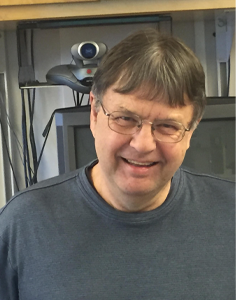
Pieter Dorrestein
Pieter Dorrestein is a Professor at the Skaggs School of Pharmacy and Pharmaceutical Sciences at UC San Diego, with appointments in the Departments of Pharmacology and Pediatrics. His group develops mass spectrometry-based methods to understand the chemistry of microbes, the microbiome and their ecological niches. He also co-develops the Global Natural Products Social Molecular Networking (GNPS) platform, an open resource for sharing and analyzing mass spectrometry data.
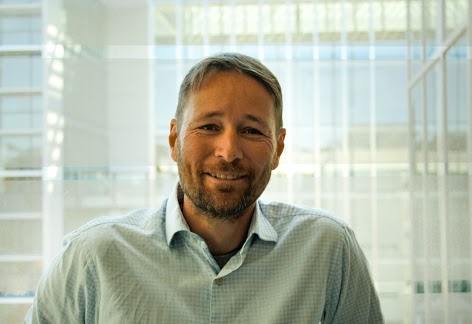
Andres Mauricio Caraballo Rodriguez, PhD
Andrés Mauricio Caraballo Rodríguez received his Ph.D. (2017) and a M.S. (2013) in Sciences from University of São Paulo (Brazil) for his work on natural products from microbial interactions of endophytes at the laboratory of Prof. Mônica T. Pupo. He received a M.S. in Biosciences and Law from Universidad Nacional de Colombia (2011) for his work related to access to genetic resources and benefit sharing. He received his B. Sc. in Pharmacy from the same institution in Colombia (2006). He is currently a Postdoctoral Researcher at laboratory of Prof. Pieter Dorrestein, Skaggs School of Pharmacy and Pharmaceutical Sciences – UCSD. His expertise areas include detection, isolation, and structural characterization of small molecules by using Mass Spectrometry and Nuclear Magnetic Resonance. He is fascinated with understanding the role small molecules play in nature as they might be involved in driving animal and plant behavior. Therefore, at the Dorrestein lab he applies different approaches such as metabolomics and data visualization that lead to reveal the chemistry behind different living systems.
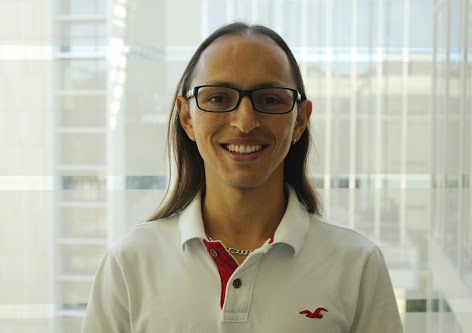
Jasmine Zemlin
Jasmine Zemlin is a researcher at UC San Diego whose work focuses on tandem mass spectrometry and metabolomics. She built many of the species and classification pages on this site.
William Nunes
William Nunes is a Staff Research Associate at the Skaggs School of Pharmacy and Pharmaceutical Sciences at UC San Diego. His work uses mass spectrometry-based untargeted metabolomics, including the annotation of bile acid from MS/MS data, as well as the study of microbial metabolites and plant natural products.

Helena Mannochio-Russo
Helena Mannochio-Russo is a postdoctoral researcher in Pieter Dorrestein’s laboratory at the Skaggs School of Pharmacy and Pharmaceutical Sciences, UC San Diego (2022–present). She received her B.S. in Chemistry from the State University of Campinas (UNICAMP, 2015), and her M.S. in Organic Chemistry (2018) and Ph.D. (2022) from São Paulo State University (UNESP), and was a Fulbright-funded visiting scholar at UC San Diego in 2019–2020. Her research combines natural products chemistry and metabolomics with data science approaches to reanalyze public metabolomics datasets, with a focus on bile acids, N-acyl lipids and carnitines. She also leads development of the Collaborative Microbial Metabolite Center knowledgebase.

Janele Ting
Janele Ting is a student at UC San Diego studying Biology with a specialization in Bioinformatics. She contributes to a project that uses large language models (LLMs) to capture expert reasoning for annotating bile acid MS2 spectra.

Former Collaborators
Emily Gentry
Emily Gentry was a postdoctoral researcher with Prof. Pieter Dorrestein at UC San Diego, where she used untargeted mass spectrometry to discover new bile acids from the gut microbiome. She received her B.S. in Chemistry from the University of North Carolina at Chapel Hill (2013) and her Ph.D. in Chemistry from Princeton University (2018). In August 2022 she joined the Department of Chemistry at Virginia Tech as an Assistant Professor of analytical/organic chemistry.
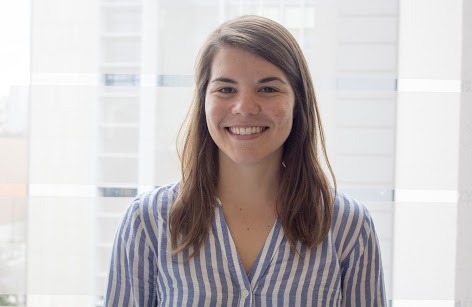
Morgan Panitchpakdi
Morgan received her B.S. in Biochemistry and Cell Biology from the University of California at San Diego and began working in the Dorrestein Lab as a staff research associate in August 2017. She worked on a variety of projects in the Dorrestein Lab using mass spectrometry to identify unique chemical signatures of foods and animals and to better understand how bile acids function as signaling molecules.
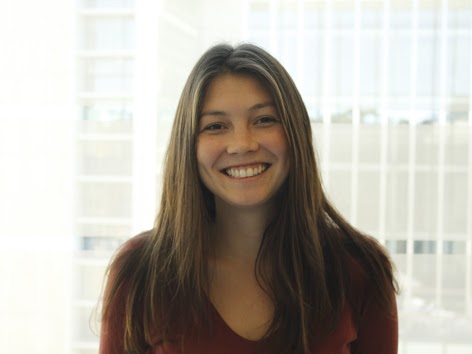
Zdeněk Kameník
Zdeněk Kameník co-leads the Laboratory of Antibiotic Resistance and Microbial Metabolomics at the Institute of Microbiology of the Czech Academy of Sciences in Prague. His group studies the metabolites produced by microorganisms, their biosynthesis and functions, using mass spectrometry-based metabolomics.
Nina Acebo
Last updated: October 6, 2026